Table of Contents
With its shimmering green feathers, crimson chest, and long streaming tail, the resplendent quetzal is one of the most breathtaking birds you can spot in Costa Rica.
Birdwatchers, photographers, and nature lovers from around the world travel here hoping to catch a glimpse of this iconic and elusive cloud forest resident. But spotting a quetzal takes more than luck; it takes timing, the right location, and a bit of patience.
In this blog, we’ll share the best place to see quetzals in Costa Rica and tips to increase your chances of spotting one. Let’s help you turn your bucket list moment into reality.
Key takeaways
- The best time to see quetzals is from February to June.
- Early mornings are when they’re most active.
- A local guide at Mistico Park increases your chances of spotting one.

Are There Quetzals in Costa Rica?
Yes! Costa Rica is one of the best places in Central America to see resplendent quetzals in the wild. These stunning, elusive birds thrive in the misty cloud forests of the country’s high-altitude regions, where the dense, humid vegetation creates the perfect habitat.
Once worshipped as a god and prized for its feathers like gold, the Resplendent Quetzal is now considered one of the most beautiful birds in the world. With its iridescent green and red body, yellow beak, and striking tail that can reach up to 65 cm long, spotting one in the wild is truly an unforgettable experience.
What is the significance of the resplendent quetzal?
For ancient Mesoamerican civilizations like the Maya and Aztecs, the quetzal symbolized freedom, light, and divine power. The quetzal feathers were considered sacred and used in ceremonial headdresses. It’s so admired in Central America that Guatemala established it as its national bird and even named its currency after it.
Why is the resplendent quetzal important?
Beyond its cultural roots, the quetzal plays an essential role in the ecosystem. As a frugivore, it helps spread seeds of wild avocado and other fruits, aiding forest regeneration. It’s also considered a flagship species, which represents the health of a particular ecosystem and helps raise awareness for conservation. When quetzals are thriving, it’s a sign cloud forest habitats are healthy, too.
How rare are Quetzals in Costa Rica?
While resplendent quetzals are considered near threatened due to habitat loss across their range, Costa Rica remains one of the few places where their population is still relatively stable.
In fact, thanks to strong forest protection efforts, Costa Rica is home to one of the largest populations in Central America, unlike in other countries where only a few specimens remain. Spotting one in the wild isn’t guaranteed, but it’s definitely possible if you visit during the right season and head to areas where their favorite fruit trees grow.
Explore our blog covering the 14 Endangered Species in Costa Rica. We highlight the quetzal and other incredible species you may still have a chance to see in their natural habitat.
Where to See Quetzals in Costa Rica?
The best place to see quetzals in Costa Rica is Mistico Hanging Bridges Park in Arenal. Its protected forest trails, elevation, and rich biodiversity, create the perfect for spotting these stunning birds.
Here’s why Mistico is a top spot for quetzal sightings:
- Located within a private, protected reserve
- Dense vegetation and elevation are ideal for bird species to inhabit
- Expert guides available who know the species’ behavior and preferred spots
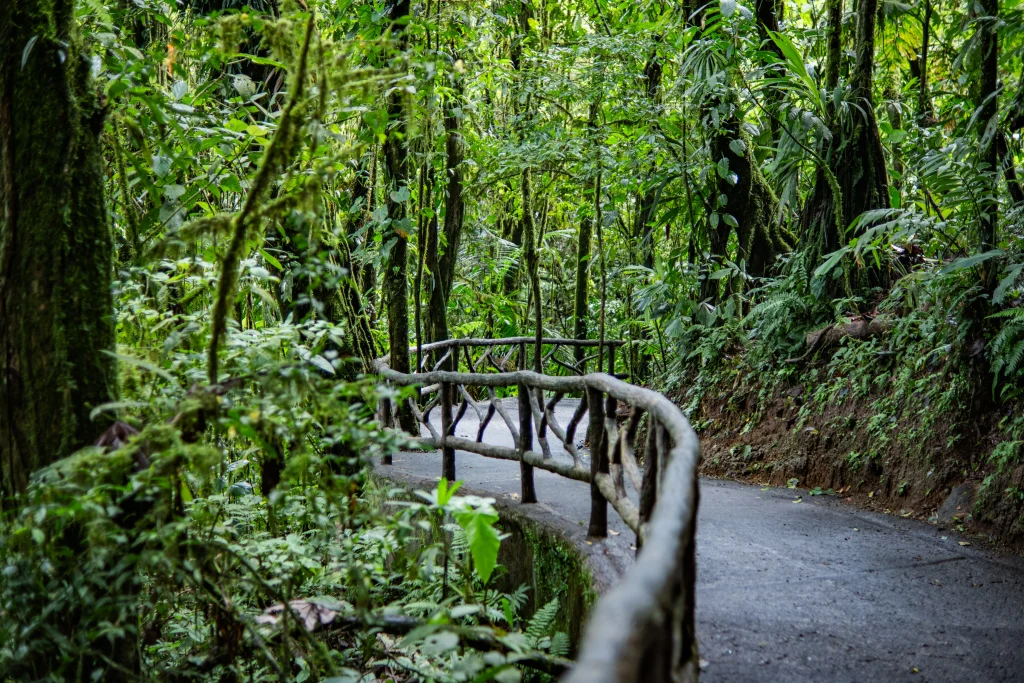
- Accessible hiking trails make it easy for all travelers to enjoy a rewarding birding experience
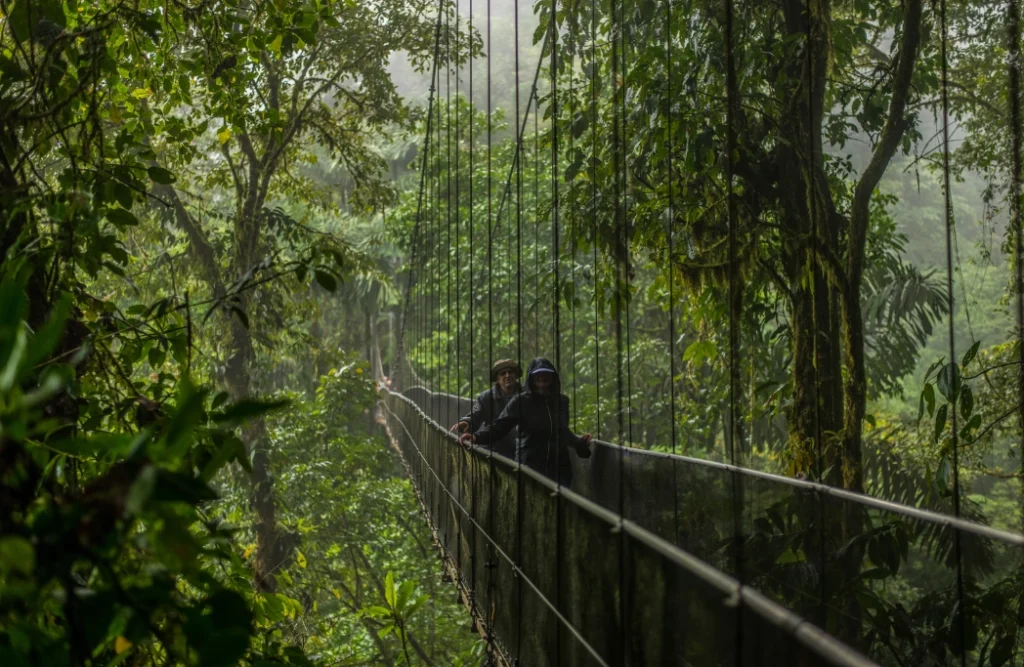
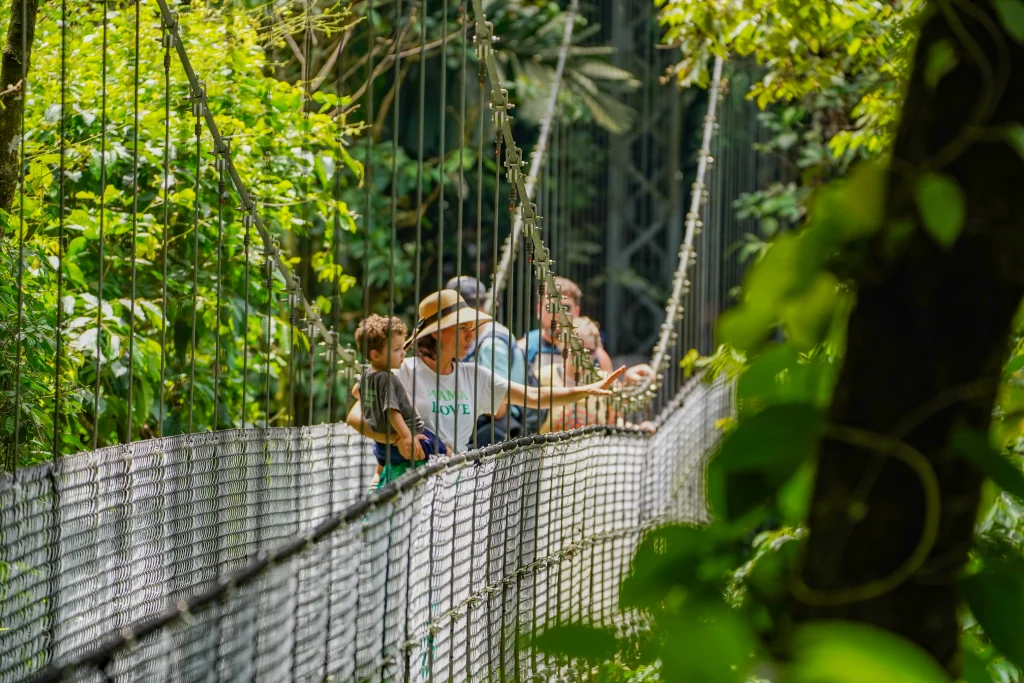
- The park’s hanging bridges provide an exclusive viewing point at the canopy level
Want to boost your chances of spotting a quetzal? Book a La Fortuna bird watching tour at Mistico Park and walk through one of the best-kept forest reserves in the region.
What Time of Year is Best to See a Quetzal in Costa Rica?
While the resplendent quetzal lives in Costa Rica year-round, your chances of spotting one increase depending on the season. These birds tend to stay hidden, especially when not breeding, so knowing the right time to visit makes a big difference.
Below is a breakdown of what to expect during each season:
Breeding season: February to June

The breeding season is hands down the best time to see quetzals in Costa Rica. During this period, the male resplendent quetzal becomes especially active and visible, showing off his vibrant colors and iconic long tail feathers to attract a mate.
It’s also when the usually shy female quetzal is easier to spot, as both sexes search for nesting sites, often in hollow trees near fruiting areas. Since the mating season brings more movement and vocalizations, birdwatchers have a better chance of observing their unique behaviors.
Mistico tip: Early mornings are ideal when the forest is quiet, and the light catches their feathers just right.
Rainy Season

The rainy or green season, which runs from May to November, overlaps with the end of the breeding season, meaning May and June can still offer good chances for sightings. The forest is lush, quieter, and full of fruit, which draws quetzals out of hiding. Trails are less crowded too, making the experience more peaceful. Just bring a rain jacket and be ready for misty magic.
Dry season
From December to April, Costa Rica sees its highest number of tourists, and while quetzals are still around, they tend to be less active and harder to spot outside the breeding months.
However, early mornings in higher elevation areas like Mistico Park can still offer opportunities to see this magnificent bird in their natural habitat, especially with a guide who knows where to look. If you’re visiting during the dry season, February and March are your best bet.
What Is the Best Time of Day to See the Quetzals in Costa Rica?
The best time of day to see quetzals in Costa Rica is early in the morning, just after sunrise. During these quiet hours, the forest is cooler, the light is softer, and birds are most active. They’re usually searching for food, calling to mates, or moving between trees.
Because quetzals have quiet behavior, they prefer still, undisturbed environments, and heading out early gives you the best chance to spot them without noise or crowds. If you’re on a guided tour, even better, guides will help you listen for calls and spot movement in the canopy.
Want to know the best time of day and season to visit Mistico Park for a truly memorable experience? Read our blog: Best Time to Visit Mistico Hanging Bridges: Ultimate Guide.
Do You Need a Guide to Spot a Costa Rican Quetzal?
Technically, you don’t need a guide to spot a quetzal, but having one can make a huge difference, especially if it’s your first time birdwatching in Costa Rica. Certified local guides know the forest intimately and are trained to recognize bird calls, movement in the canopy, and behavior patterns that most visitors would miss.
Beyond the resplendent quetzal, a guide can help you spot and identify other incredible species along the trail, like toucans, hummingbirds, motmots, frogs, and even sloths or monkeys. They’ll also share stories, conservation insights, and forest facts that turn a simple walk into a rich, educational experience.
Want to know what else you might see along the trail? Read our blog: 16 Animals in Arenal You Can See at Mistico Hanging Bridges.

Tips to Improve Your Chances of Seeing a Resplendent Quetzal
Spotting a quetzal can be a magical moment, but it takes the right approach and a little preparation.
Here are a few tips to help increase your chances during your visit:
- Bring binoculars or a camera with a zoom lens: Quetzals often perch high in the canopy, so good optics can make all the difference.
- Dress in layers and neutral colors: Early mornings can be cool, and neutral tones help you blend in with your surroundings.
- Book an early morning tour: This is when birds are most active, and the forest is at its quietest.
- Stay quiet and move slowly: Quetzals are shy and easily spooked, so patience and stillness often lead to the best sightings.
- Go with a certified guide: A qualified tour guide knows where to look and what to listen for and can spot movement in the trees that’s easy to miss.
Plan Your Quetzal-Watching Adventure with Mistico Park
If seeing a resplendent quetzal in the wild is on your bucket list, Mistico Park is the perfect place to make it happen. With its peaceful trails, expert guides, and privileged access to the forest canopy, you’ll be walking through one of the most bird-rich areas in the Arenal region.
Whether you’re a seasoned birder or simply hoping for a meaningful nature experience, our team is here to help you get the most out of your visit. Contact Mistico Park today to book your guided birding tour and start planning your unforgettable quetzal-watching adventure.
FAQs
What is the quetzal famous for?
The quetzal is famous for its vibrant green and red feathers, long tail, and its cultural significance in Mesoamerican history as a symbol of freedom and beauty.
How many Quetzals are in Costa Rica?
There’s no exact number, but Costa Rica is home to a healthy population of resplendent quetzals, especially in protected cloud forests like those in Monteverde Cloud Forest, San Gerardo de Dota, and Arenal.
What does a quetzal sound like?
The quetzal has a soft, whistling call that sounds like “wac-wac” or “kyow,” often heard in the early morning, especially during mating season.
What month is best for birding in Costa Rica?
Mid-February to April is considered the peak birding season, with excellent chances of seeing migratory and resident species, especially during the quetzal’s breeding season.
Where can I see the most birds in Costa Rica?
Mistico Hanging Bridges Park in Arenal is one of the best places for birdwatching in Costa Rica. Its mix of elevation, dense forest, and canopy-level bridges makes it ideal for spotting a wide variety of species.